
Top 5 Signs Your Property Has Water Damage
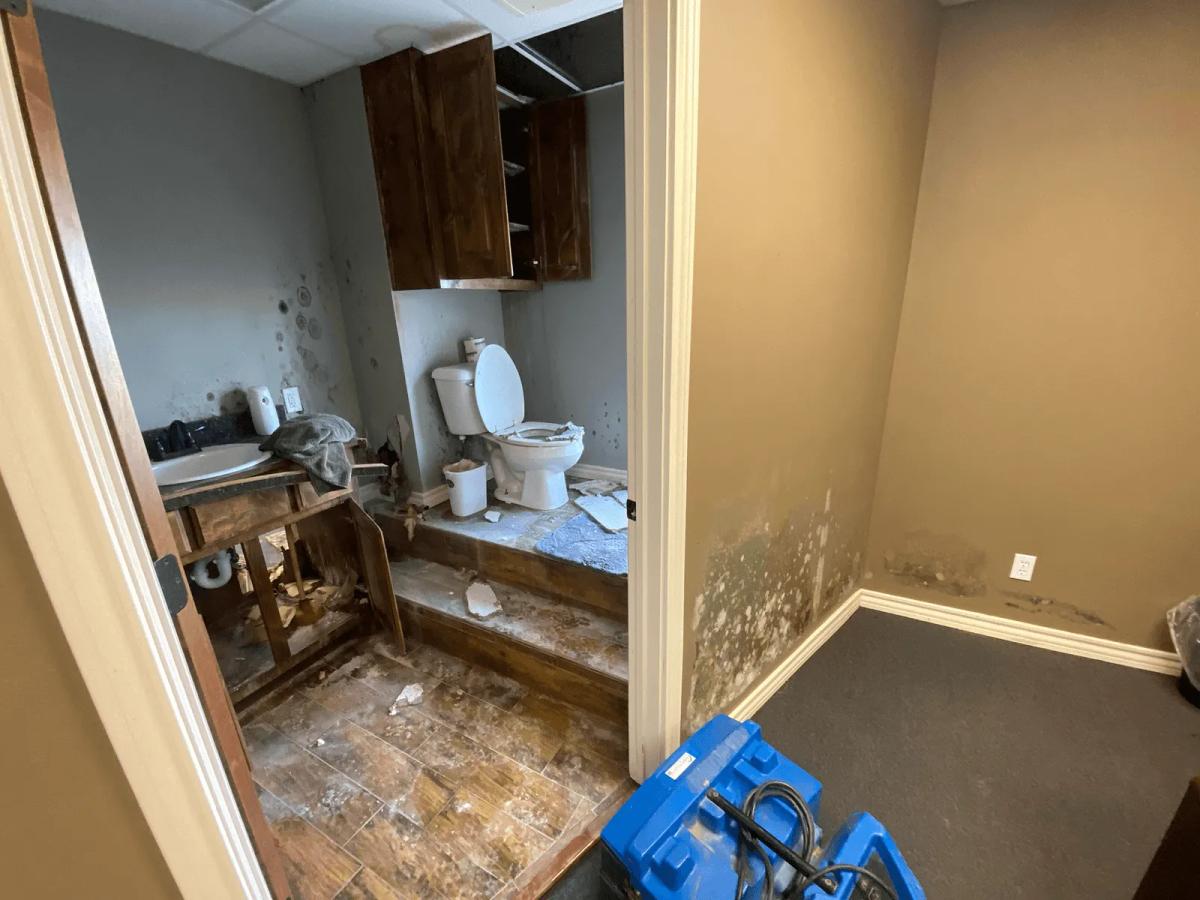
The expensive water damage is never the kind you can see. A burst pipe floods a laundry room and you know about it in four minutes. A supply line weeping behind a wall runs for eight months and takes the framing with it.
The signs below are the ones that show up before the ceiling comes down. Two of them you can check yourself in about ten minutes.
1. The water bill does not add up
This is the most underused early warning available to a property owner, and it works because leaks show up in usage data long before they show up in drywall.
EPA's WaterSense program reports that the average household's leaks account for more than 9,300 gallons of water wasted per year, and that 9% of homes have leaks wasting 50 gallons or more per day. EPA's benchmark: if a family of four uses more than 12,000 gallons in a winter month, there is likely a serious leak somewhere.
Two tests, both free.
The meter test. Find your water meter, usually near the curb. Note the reading. Then go two hours without using any water anywhere on the property. No toilets, no ice maker, no irrigation. Read it again. If the number moved at all, water is going somewhere it should not.
The toilet test. Put a few drops of food coloring in the tank at the back of the toilet and wait ten minutes without flushing. If color shows up in the bowl, the flapper is leaking. Flush immediately afterward so the dye does not stain the tank.
Neither test finds a leak inside a wall specifically. What they tell you is whether there is a leak at all, which is the question worth answering first. For scale, EPA notes a showerhead dripping at 10 drips per minute wastes more than 500 gallons a year.
2. You smell it before you see it
Persistent musty or earthy odor in a room, a closet, or near the floor is the classic sign of moisture in a place you cannot see. It is also the sign people ignore longest, because odor is easy to attribute to an old house or a closed-up room.
The odor comes from microbial growth on damp material, which means by the time you can smell it, the moisture has been there a while. EPA's guidance is that materials dried within 24 to 48 hours will in most cases not grow mold. A smell means that window closed some time ago.
Pay attention to where the smell is strongest and whether it changes with weather or with the HVAC running. Stronger on humid days points to a moisture source that is still active. Stronger when the air handler runs points at the duct system or something near the return.
CDC's position on next steps is useful here: if you can see it or smell it, testing to identify the species does not change what has to happen. Find the water, fix it, and remove the affected material.
3. Staining, and the wet area is bigger than the stain
Brown or yellow rings on a ceiling, discoloration on drywall, dark patches at the base of a wall, white chalky residue on masonry. These are all straightforward.
The part that gets people is scale. A stain is where water sat long enough to leave minerals behind. The wet area is always larger, often much larger, because water wicks through porous material and travels along framing and pipe runs before it settles.
A dinner plate sized ceiling stain routinely corresponds to several feet of wet insulation above it. This is also why a stain that "stopped growing" is not evidence the leak stopped. It may only mean the leak found a different path.
If you see staining, note the date and size on your phone. If it changes after the next rain or the next hot shower, you have information about the source.
4. Materials moving
Building materials change shape when they take on water, and they do it in recognizable ways.
Floors. Hardwood cupping, where board edges rise higher than the centers, means moisture from below. Crowning, where the centers rise, often means it was dried too fast or sanded while still wet. Laminate swells and peaks at the seams. Vinyl and tile release from the adhesive and feel hollow or loose underfoot.
Walls and ceilings. Bubbling or blistering paint. Wallpaper lifting at a seam. Drywall that feels soft when pressed. Nail pops appearing in a line. A ceiling that has developed a visible sag has water pooling above it and should be treated as urgent.
Trim and doors. Baseboard separating from the wall or swelling at the bottom edge. Doors that suddenly stick in their frames when the weather has not changed. Cabinet kick plates and the bottom shelf under a sink swelling or delaminating.
Any of these on their own can have another explanation. Two or three of them in the same area is a pattern.
5. Humidity that will not come down
Sometimes there is no stain, no smell, and no visible damage, just a house that feels damp.
EPA recommends keeping indoor relative humidity below 60%, ideally between 30 and 50%, and points out that a humidity meter costs about $10 to $50 at a hardware store. That is the cheapest diagnostic tool in this entire article.
Signs to watch for: condensation on the inside of windows, cold water pipes sweating, a bathroom that stays foggy far longer than it used to, or air conditioning that runs constantly without the house feeling comfortable. Persistent readings above 60% mean moisture is entering faster than it is leaving, and the usual sources are a crawlspace, a slow leak, a failing HVAC condensate line, or a ventilation problem.
Worth checking the crawlspace or the area under the house if you have one, because that is frequently where the water is.
What to do when you find something
Find the source before doing anything else. Cleaning, painting, or replacing material while water is still arriving is money spent to reschedule the same job.
Document it. Photos with dates, meter readings, where the smell is strongest. If this turns into a claim, that record is worth having.
Move fast on anything active. Insurance Information Institute figures from ISO for 2018 through 2022 put the average water damage and freezing claim at $13,954, and about 1 in 60 insured homes files one each year. Most of the variation in that number comes down to how long the water ran.
Understand your coverage. Policies generally cover sudden and accidental water damage, such as a pipe that bursts. They generally do not cover gradual damage from a leak that went unaddressed, and flooding from outside requires separate flood coverage. Which is the practical argument for acting on the signs above rather than watching them: a problem caught early is usually both cheaper and likelier to be covered.
Getting a straight answer
If you have found one of these signs and cannot locate the source, that is a reasonable time to bring in someone with moisture meters and thermal imaging. Finding water inside a wall without cutting the wall open is a solvable problem with the right equipment.
Dri Right handles water damage restoration, structural drying, mold testing and removal, and the reconstruction afterward across Oklahoma City, Elgin, Duncan, Chickasha, and Lawton. Our technicians carry IICRC certification and we keep crews on call around the clock.
If something in your property is wet and you are not sure how bad it is, call us at (580) 574-2383.


