
Smoke Damage Restoration Essentials for Chickasha, OK Homeowners
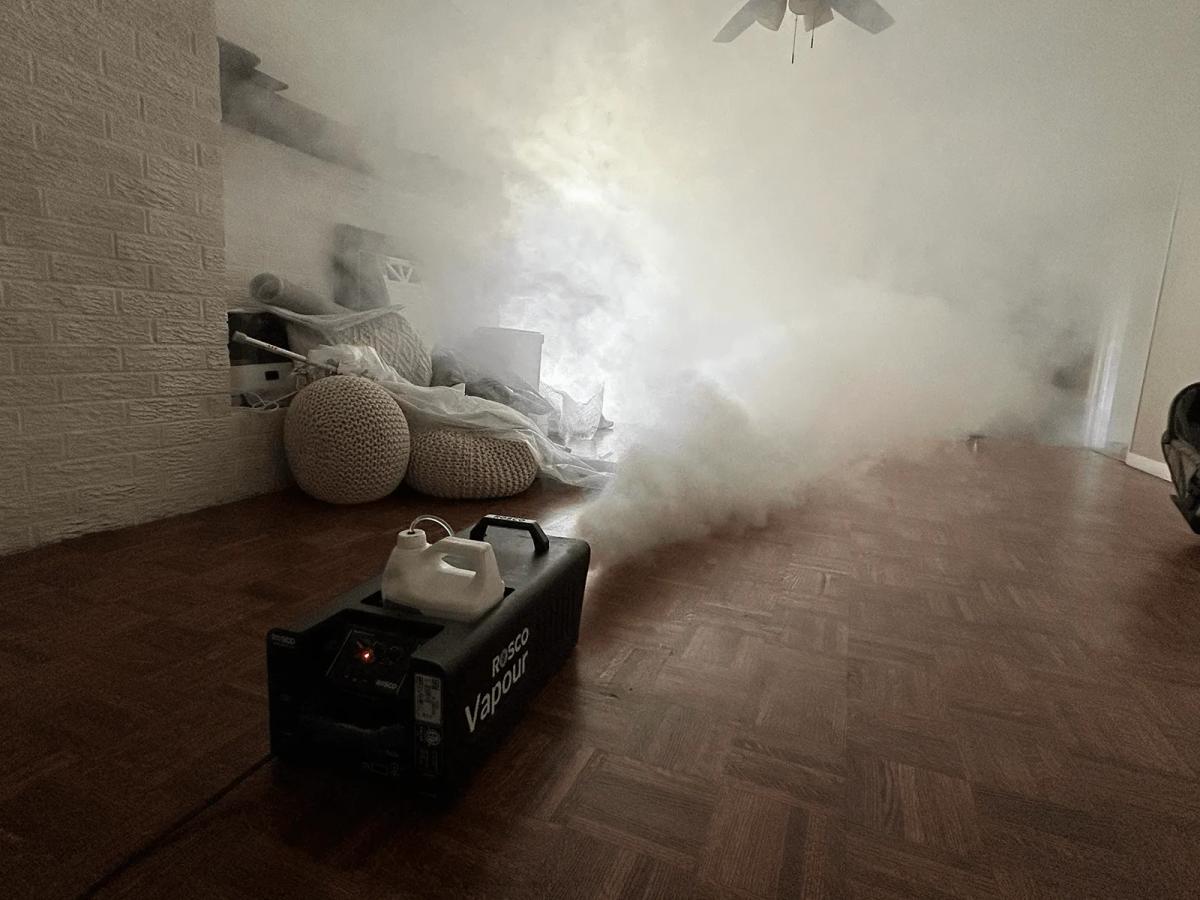
A grease fire on the stovetop burns for ninety seconds. The fire department is not called. Nothing structural is damaged. Two weeks later the kitchen still smells like it happened yesterday, and so does the hall closet on the other side of the house.
This is the most misunderstood category of property damage we deal with. The fire was small. The damage is not.
Small fires are the common case
Cooking is the leading cause of residential fires in the United States by a wide margin. The US Fire Administration estimates 343,000 residential building fires in 2024, with cooking accounting for 46.7% of them. Unintentional or careless behavior came in second at 10.0%, followed by heating at 7.9% and electrical malfunction at 7.7%.
Most of those fires never make the news, because most of them are put out in a minute by somebody with a lid or an extinguisher. But the smoke from a ninety second grease fire fills a house, and where it goes next is the whole problem.
For the fires that do get large, the numbers change character entirely. Insurance Information Institute data from ISO for 2018 through 2022 shows fire and lightning as the single most expensive property damage claim category, averaging $83,991 per claim against $13,954 for water damage and freezing. Fire claims are rare, about 1 in 425 insured homes a year, and enormous when they happen.
Where the smell actually lives
Here is the finding that should change how you think about smoke odor.
A 2023 study published in Science Advances instrumented a smoke contaminated house and tracked what happened to the volatile organic compounds in the smoke over time. The researchers found that smoke VOCs do not stay in the air. They partition onto indoor surfaces, and those surfaces become reservoirs holding far more contaminant than the air ever does. Then they slowly release it back out.
That single mechanism explains almost everything homeowners find frustrating about smoke odor.
It explains why the smell seems to go away and then returns on a warm day. Higher temperatures drive faster re-emission from the reservoir.
It explains why opening the windows helps and then stops helping. The study found that ventilation and portable air cleaners reduced indoor VOC concentrations only while they were actively running. Turn them off and levels climbed back toward where they started, because the reservoir was never touched.
And it explains why deodorizers fail. Masking an odor does nothing to a chemical reservoir sitting in the drywall paper, the carpet fibers, the curtains, and the underside of the cabinet boxes.
The same study identified what did work. Physical surface cleaning, specifically vacuuming and mopping, removed the reservoir permanently rather than temporarily. The authors noted their findings likely apply beyond wildfire smoke to other heavy indoor smoke events.
If you take one thing from this article: smoke odor is a surface problem, not an air problem, and it is solved by cleaning surfaces.
What professional smoke restoration involves
Knowing the mechanism tells you what the work has to accomplish. A competent scope covers roughly this ground.
Assessment and mapping. Smoke travels with air currents and settles unevenly. It concentrates on cooler surfaces, inside cabinets, on the return air side of the HVAC system, and in rooms nowhere near the fire. The first job is finding where it went, not assuming.
Source removal. Charred material, soot loaded insulation, and anything porous that cannot be cleaned to the substrate comes out. Soot is acidic and continues to etch metals, finishes, and grout for as long as it sits there, so this is a clock, not a preference.
Surface cleaning, comprehensively. This is the phase that does the real work and the phase most often shortchanged. Every affected surface, including ceilings, the tops of door casings, inside closets, behind appliances, and the interiors of cabinets and drawers. Different residues need different methods: dry sponging for dry smoke residue, wet cleaning for oily residues from protein and grease fires, and abrasive or solvent methods where residue has bonded to a finish.
HVAC and duct work. A forced air system running during or after a fire distributes smoke into every room it serves and then holds residue in the ducts, where it re-contaminates a house that was just cleaned. Duct cleaning is not an upsell on a smoke job, it is part of the job.
Contents. Clothing, upholstery, electronics, books, and personal belongings each need different handling, and many need to leave the property to be cleaned properly. The IICRC publishes a dedicated standard for this, the S540 standard for restoration of fire and smoke damaged contents, alongside its water and mold standards.
Deodorization last. Thermal fogging, hydroxyl treatment, and ozone all have legitimate uses. What they cannot do is substitute for source removal and surface cleaning. Deodorizing a house that still holds its reservoirs buys a few weeks.
Sealing where required. Occasionally a substrate cannot be cleaned to the point of odor neutrality, framing lumber in a heavily involved area being the usual case. Sealing that surface is appropriate. Sealing an entire house because cleaning was skipped is not.
What to do in the first day
If you have had a fire of any size in Chickasha, a few things matter immediately.
Do not run the HVAC system. It moves smoke into unaffected areas and loads the ducts.
Do not wipe soot off walls with a damp cloth. Wet cleaning oily residue without the right agent smears it into the paint and can set the staining permanently.
Do not throw anything away before it is documented. Insurance pays against inventory, and a contents list built after the fact from memory is always short.
Do turn off the pilot light or gas supply if the fire involved an appliance, and leave the property until the fire department clears it.
Do call your carrier and a restoration contractor the same day. Acidic soot residue does measurable damage in the first 48 to 72 hours, particularly to metal fixtures, appliance finishes, and grout.
One thing people do not expect
Fire suppression means water, and water means a second problem running on a much tighter clock.
The EPA's guidance is that water damaged materials dried within 24 to 48 hours will in most cases not grow mold. Miss that window and a fire loss becomes a fire loss plus a mold remediation. On any job where a hose line was used, extraction and structural drying start immediately and run in parallel with the smoke work rather than after it.
That is one reason to hire a company that does both. A smoke specialist who does not dry, or a water crew that does not understand soot chemistry, leaves half the job for somebody else.
Getting help in Chickasha
Dri Right handles fire and smoke restoration, odor control, fine particulate cleaning, air duct cleaning, and contents pack-out and restoration, and our technicians carry IICRC certification. We have technicians on call around the clock, and we work directly with your insurance carrier through the claims process.
If your house still smells like smoke after you have cleaned it, that is not a sign you cleaned badly. It is a sign the reservoirs are still there. Call us at (580) 574-2383 and we will tell you what it will take to get them out.


