
Key Reconstruction Services Available in Elgin, OK After Disaster
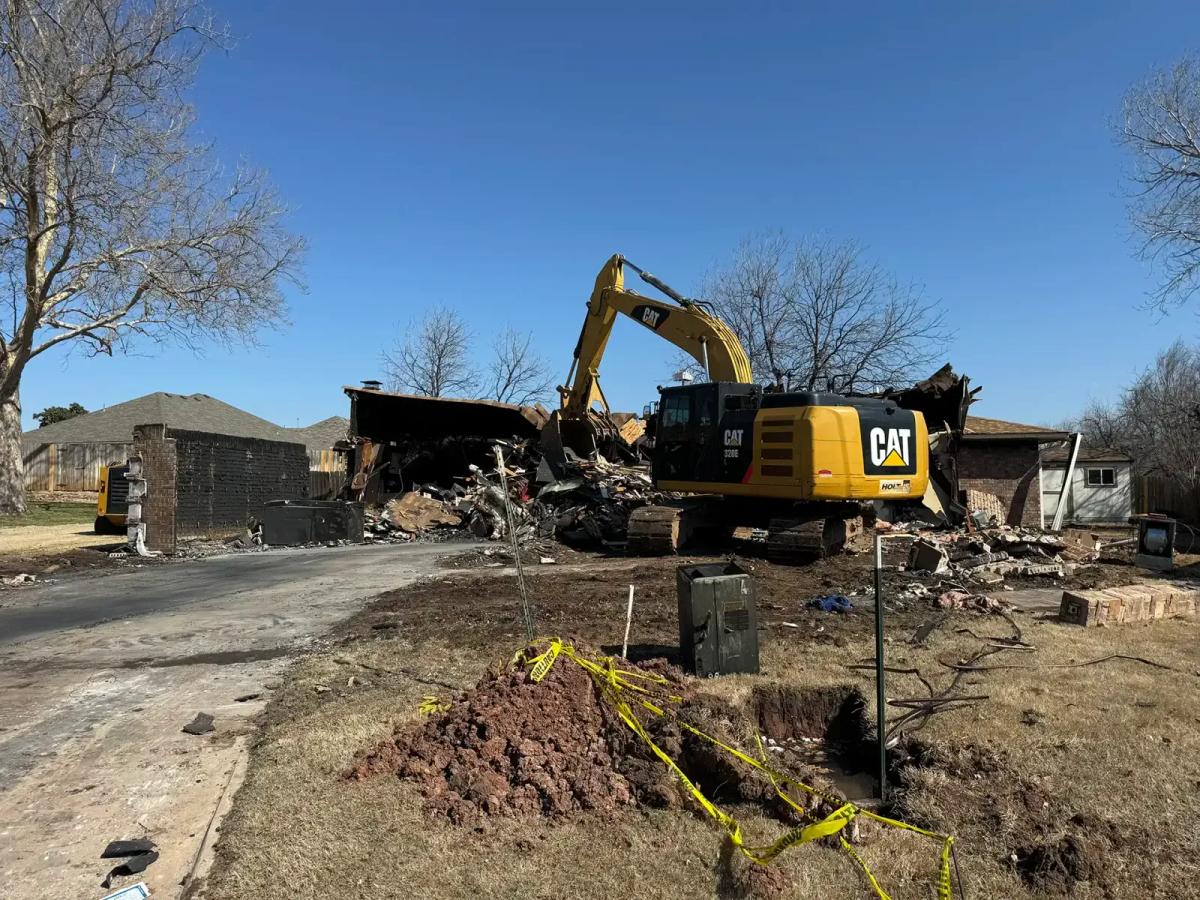
There are two halves to recovering from property damage, and most people only know about the first one.
The first half is mitigation. Crews arrive, tarp the roof, extract standing water, set air movers and dehumidifiers, pull out soaked carpet pad and ruined drywall, and stop the damage from spreading. It is loud, fast, and usually done in under a week.
Then the equipment leaves, and you are standing in a house with studs showing, no flooring, a hole where the window used to be, and a plywood patch on the roof. That is where the second half starts. Reconstruction is the part that turns a stabilized building back into a house, and it is the part that takes months instead of days.
Why Comanche County sees this cycle so often
Oklahoma property owners deal with the mitigation-to-rebuild cycle more than most of the country.
Oklahoma set a new state annual tornado record in 2024 with 152 confirmed, one of six states to break its record that year, according to the National Weather Service. Nationally, 2024 produced 1,796 confirmed tornadoes, the second most since record keeping began in 1950 and only 21 behind the 2004 season.
Tornadoes get the attention, but hail and straight-line wind do far more cumulative damage to housing stock. Insurance Information Institute figures drawn from ISO data for 2018 through 2022 show wind and hail as the most frequent property damage claim in the country, hitting about 1 in 35 insured homes each year, with an average claim of $13,511.
The same data set puts Oklahoma's average homeowners premium at $2,155 in 2021, third highest in the country behind only Florida and Louisiana. That number is a direct reflection of how often carriers pay out here.
What reconstruction actually covers
The word "reconstruction" gets used loosely. In practice, on a residential loss in Elgin, it means some combination of the following.
Roofing. Almost always the first exterior item, because nothing inside can be finished until the building is watertight. Hail bruising and wind-lifted shingles frequently are not visible from the ground, which is why roofs get missed on the initial walkthrough and turn into supplemental claims later.
Door and window installation. Broken glazing, blown-in frames, and units racked out of square by structural movement. Windows and exterior doors are part of the building envelope, so like roofing they are sequenced early.
Foundation repairs. Less common but more serious. Prolonged water against a foundation, soil movement, or the structural loads of a severe wind event can leave cracking, settling, or bowing that has to be corrected before anything above it is rebuilt. If a floor is out of level, every finish installed on top of it will be out of level too.
Flooring. Subfloor first, then finish material. Water damage in particular tends to be worse at the subfloor than it looks from above, and it is the single most common place we see corners cut by contractors trying to hit a number.
Trim work. Baseboard, casing, crown, built-ins, stair parts. This is the phase where a house either looks repaired or looks patched, and it is disproportionately what homeowners notice for the next decade.
Drywall, insulation, paint, cabinetry, and mechanical reconnections thread through all of it. On a whole-room or whole-house loss, the sequence matters as much as the work.
The handoff is where jobs go wrong
Here is the practical thing worth knowing, and it applies whether you hire us or somebody else.
The most common failure point in a property loss is not bad craftsmanship. It is the seam between the mitigation contractor and the rebuild contractor. When those are two different companies, several things tend to happen:
The moisture documentation does not transfer. The mitigation crew took daily moisture readings and knows exactly which framing members were wet and which were dry. If the rebuild contractor never sees those logs, they close up a wall assembly without confirming it reached a drying goal. The EPA's guidance is blunt about the timeline here: dry water damaged materials within 24 to 48 hours and in most cases mold will not grow. Close a wall over damp framing weeks later and you have built a problem into the structure that nobody will find until it smells.
The scope gets split. Mitigation writes their scope, rebuild writes theirs, and the items in between belong to neither. Detached trim that was pulled to access wet insulation. The subfloor section cut out for drying access. Small things, but they surface at the end of the job when everyone is tired of it.
The claim gets fragmented. Your adjuster is now reconciling two estimates from two companies with two different line item structures, which slows approval and increases the odds something legitimate gets denied for lack of documentation.
None of that is unavoidable. It is just what happens when nobody owns the whole job.
Questions worth asking any reconstruction contractor
Before you sign anything, ask:
- Who holds the scope from mitigation through final punch list, and is that one contract or two?
- Will you show me the moisture readings for every assembly before you close it up?
- Are you licensed and insured for structural work specifically, not just cosmetic repair?
- What is the sequence, and what is the realistic timeline for each phase given current material lead times?
- How do you handle supplements when hidden damage turns up after demolition?
- Who communicates with my adjuster, you or me?
That last one matters more than people expect. Insurance carriers pay against documented scope. A contractor who works directly with your adjuster and documents as they go is the difference between a claim that covers the repair and a claim that covers most of it.
A note on timing
Reconstruction after a significant loss in Oklahoma is rarely fast, and anyone promising otherwise is either underestimating the scope or planning to skip steps. Material lead times, permitting, insurance approvals, and the simple fact that a whole neighborhood often files claims from the same storm all stretch the calendar.
What you can control is the order of operations. Get the building envelope closed first. Confirm the structure is dry and level before finishes go in. Document everything. A house rebuilt in the right sequence at a reasonable pace holds up. A house rushed to a deadline shows it within two years, usually at the joints in the trim and the transitions in the flooring.
Where we fit
Dri Right handles both halves. We are the crew doing water extraction, structural drying, smoke and odor work, and contents pack-out, and we are also the crew doing the trim, foundation repairs, flooring, roofing, and door and window installation that puts the property back together. Our technicians carry IICRC certification, we work directly with your insurance company through the claims process, and we keep the moisture documentation with the job from the first day to the last.
We have been serving Elgin, Lawton, and the surrounding Comanche County communities since 2018. If you are looking at a damaged property and trying to figure out what happens after the fans come out, call us at (580) 574-2383 and we will walk the scope with you.


