
How Fire Damage Restoration Protects Your Property in Oklahoma City, OK
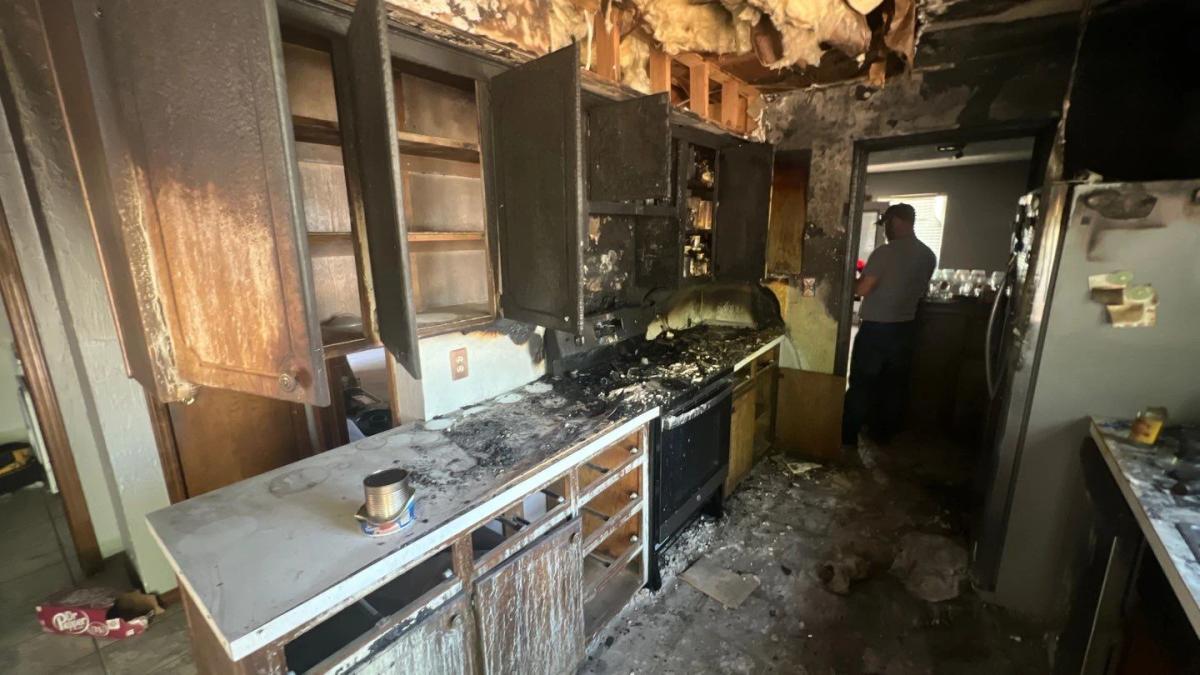
A structure fire is over quickly. Fire departments arrive, knock it down, overhaul the space to make sure nothing is still burning, and clear the scene. From ignition to all clear is often less than an hour.
The damage does not stop when the fire does. It changes form. For the next several days a fire loss keeps getting worse on three separate tracks, and what a restoration crew does in that window determines how much of the house and how much of what is in it survives.
The scale of what is at stake
Fire is the most expensive thing that happens to a house.
Insurance Information Institute data from ISO covering 2018 through 2022 puts the average fire and lightning claim at $83,991, roughly six times the $13,954 average for water damage and freezing and six times the $13,511 average for wind and hail. Fire claims are also uncommon, striking about 1 in 425 insured homes a year, which is exactly why most people have no frame of reference when it happens to them.
Nationally, the US Fire Administration reports 1,414,191 fires in 2024, with 3,881 deaths, 13,027 injuries, and $21.3 billion in direct loss, based on NFPA figures. Residential structures accounted for 23.4% of fires by property use.
Track one: soot is corrosive and it is running a clock
Soot is not dust. It is an acidic residue loaded with the chemistry of whatever burned, and modern house fires burn a great deal of plastic, foam, and synthetic textile.
Left in place, soot etches. Metal fixtures pit and tarnish. Appliance finishes and chrome discolor. Grout stains. Painted surfaces absorb residue into the film, and what could have been washed off in day one becomes permanent in week two. Electronics are especially vulnerable, because acidic residue works into vents and onto circuit boards and continues corroding after the device is unplugged.
This is the single biggest reason restoration is time sensitive rather than merely urgent-feeling. The difference between a fixture that cleans and a fixture that gets replaced is frequently a matter of days.
Track two: the water from putting it out
Every gallon that goes on a fire stays in the building.
The EPA's guidance is direct: dry water damaged materials within 24 to 48 hours and in most cases mold will not grow. Suppression water saturates carpet pad, wicks up drywall, pools on subfloor, and runs down inside wall cavities to floors nobody thinks were involved. On a July fire in Oklahoma City, with the house open and outdoor humidity high, a wet structure is prime growth conditions almost immediately.
A fire loss that is not dried on schedule becomes a fire loss plus a mold remediation, on the same claim, with additional demolition. It is one of the more preventable ways a job doubles in scope.
Track three: the building is open
After overhaul, a damaged structure typically has holes in the roof where crews vented it, broken windows, and doors that no longer lock. In that condition the property is exposed to weather, to animals, and to anyone who walks up.
Most homeowners policies require the insured to take reasonable steps to prevent further damage. Practically, that means board-up and tarping happen the same day, not when the schedule allows.
What the first 72 hours look like
A properly sequenced fire restoration runs roughly in this order.
Securing the property. Board-up of window and door openings, tarping or temporary roofing over vented and burned areas, and fencing where the structure is unsafe. This protects the building and satisfies the policy obligation to mitigate further loss.
Assessment and documentation. Photographs, moisture mapping, soot mapping room by room, and a written scope. This is also where the contents inventory begins. Insurance pays against documented loss, and inventory reconstructed from memory later is always incomplete.
Water extraction and structural drying. Standing water out, air movers and dehumidifiers in, daily moisture readings logged against a drying goal. Running in parallel with the smoke work, not after it.
Debris removal and demolition. Charred structural material, soot loaded insulation, and porous materials that cannot be cleaned to the substrate come out. Doing this early reduces the ongoing odor and residue load on everything still in the house.
Contents pack-out. Belongings that can be restored leave the property for cleaning at a facility, which serves two purposes: it gets them away from the acidic environment, and it clears the house so structural work can move.
Surface cleaning and deodorization. Every affected surface cleaned by a method matched to the residue type, HVAC and duct work included, then deodorization once the sources are gone.
Reconstruction. Drywall, flooring, trim, cabinetry, roofing, doors and windows, and whatever structural repair the loss requires.
About your belongings
The question homeowners ask first is almost never about the building. It is about what is inside it.
More is salvageable than people assume, and the determining factor is usually how fast items got out of the contaminated environment. Textiles and clothing often clean successfully with specialized processes. Hard goods, dishes, and furniture frequently do. Documents and photographs can sometimes be recovered. Electronics depend heavily on speed, because corrosion progresses whether or not the unit is powered.
The IICRC maintains a dedicated standard for this work, the S540 standard for restoration of fire and smoke damaged contents, which sits alongside its water damage and mold remediation standards.
What generally does not come back: heavily charred porous items, food and consumables including anything in a refrigerator that lost power, cosmetics and medications exposed to heat, and mattresses and upholstered pieces that absorbed heavy residue. A contractor who tells you everything is recoverable is not being straight with you.
What to do and what not to do
Do not enter the structure until the fire department has cleared it. Do not turn on the HVAC system, which will move smoke into unaffected rooms and load the ductwork. Do not plug in or test electronics that were exposed. Do not wipe soot with a wet cloth, which can drive oily residue into a finish permanently. Do not throw anything out before it is photographed and listed.
Do call your insurance carrier the same day. Do call a restoration contractor the same day, because securing the property and starting the drying clock cannot wait for a claim to be adjusted. Do keep receipts for lodging and immediate necessities, which are frequently covered under additional living expense.
What restoration is really protecting
The framing on a partial loss is often fine. What restoration protects is everything that degrades on a schedule: the finishes, the fixtures, the mechanical systems, the contents, and the drying window that stands between a fire claim and a fire claim with mold attached.
That is why the response time matters more than it seems like it should. It is not about speed for its own sake. It is that several clocks start the moment the fire is out and they all run in the wrong direction.
Dri Right keeps technicians on call 24 hours a day across the Oklahoma City area, with a usual response of under an hour from your call to a crew loaded and moving. We handle securing the property, debris removal, structural drying, soot and odor work, contents pack-out and restoration, and the reconstruction that follows, and we work directly with your insurance company throughout. Our technicians and our business carry IICRC certification.
If you are dealing with a fire, call us at (580) 574-2383.


